
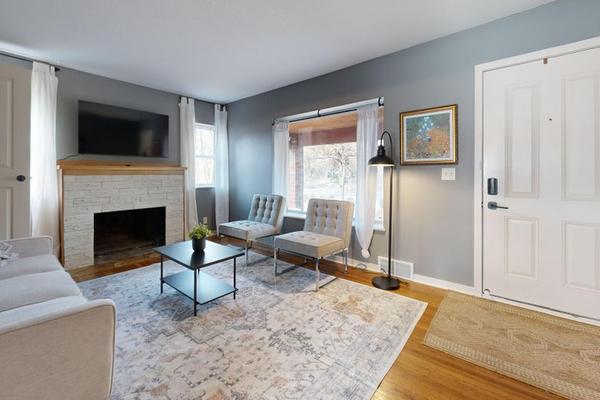
A fireplace wants to be admired. A television wants everyone’s eyes on it. Put both in one room, and a perfectly ordinary sofa suddenly seems impossible to position. The solution isn’t to make the two features compete for the center of attention. It’s to decide which one leads during everyday use, then give the other a clear supporting role.
A successful living room with fireplace and TV layout considers viewing angles, conversation, heat, and the paths people actually walk. Start with those practical questions before choosing a symmetrical arrangement simply because it looks good in a photograph.
Decide Which Focal Point Leads
Think about a typical weekday rather than a special occasion. If your household watches television most evenings, arrange the primary sofa for a comfortable screen view. If the room is mainly for reading, talking, and enjoying the fire, orient the seating toward the hearth and let the TV sit slightly off-axis.
For a dual focal point living room, visual balance does not require identical prominence. A textured fireplace surround can supply character while a lower, quieter media cabinet keeps the screen practical. The reverse also works: a simple hearth can complement a clearly defined television wall.
Before moving furniture, sit in your favorite chair and look toward both features. You should be able to enjoy each without continually twisting your neck. That simple test reveals more than a floor plan alone.
Four Fireplace and TV Arrangements That Make Sense
Place the TV beside the fireplace
A TV next to fireplace layout often gives you the best compromise. Keep the screen at a comfortable seated viewing height, then make the two sides of the wall feel related with similar finishes, restrained shelving, or a continuous low cabinet.
Don’t force the TV and fireplace into matching dimensions. Instead, balance their overall visual weight: a tall fireplace surround may pair well with a wider television and a low console. Angle the sofa slightly toward the TV, with an accent chair nearer the hearth for conversation.
Use perpendicular walls for separate viewing directions
If the fireplace occupies one wall and the TV another at a right angle, float a sofa so it faces between them. A swivel chair or two makes this arrangement especially flexible. You can turn toward the screen for movie night, then rotate toward the fire when guests arrive.
This option suits open-plan rooms because it doesn’t demand that all furniture hug a single wall. Keep the route behind the sofa unobstructed, particularly where people move between the kitchen and living area.
Put the TV on the opposite wall
Opposing focal points work best when the room has enough width for separate seating directions. One sofa might face the screen while two chairs create a smaller fireside conversation area. A shared rug or coordinated upholstery connects the zones.
In a narrow room, however, this layout can become a constant turning exercise. Avoid it if the only practical sofa position leaves viewers facing the fireplace instead of the television.
Mount the TV above the fireplace only when appropriate
Stacking both features frees up wall space, which is tempting in compact rooms. But it can place the screen uncomfortably high and expose electronics to heat. Samsung, for example, advises against mounting its TVs above fireplaces. Always follow the specific television and fireplace manufacturers’ installation, clearance, and temperature requirements.
Some purpose-designed fireplaces manage heat in ways that permit a TV above them, but that permission is model-specific. A tilting or pull-down mount may improve viewing comfort; it does not eliminate heat restrictions. When in doubt, choose a neighboring wall and consult a qualified installer.
Build Seating Around the Way People Move
The strongest fireplace TV arrangement starts with one primary viewing seat. Place the sofa where the screen is easy to watch, then use movable chairs to complete a conversation circle. A coffee table should serve the whole group without blocking the route to the hearth or doorway.
As a planning starting point, aim for roughly 30–36 inches of clear circulation space on main walking paths where the room allows. This is a comfort guideline, not a substitute for accessibility or building requirements. In smaller spaces, prioritize the busiest route instead of squeezing identical gaps around every item.
Consider a rectangular living room with a fireplace centered on the short wall and a TV on the longer wall to its right. Rather than lining the sofa up with the hearth, move it toward the room’s center and rotate it toward the screen. Put a lightweight chair near the fireplace, leaving a direct path from the entry to the far doorway. Both features become usable without creating two disconnected rooms.
If you’re working with tighter proportions, start by sketching small living room furniture layouts with painter’s tape on the floor. You’ll spot pinched walkways before committing to heavy furniture.
Get Viewing Height, Glare, and Scale Right
For relaxed television viewing, the center of the screen should generally sit close to seated eye level. Measure from the actual sofa rather than relying on a universal mounting height. A high mantel can undermine that comfort even when the fireplace wall looks beautifully symmetrical.
Check glare at the times you normally watch. Windows opposite the TV can reflect daylight directly into the picture; curtains, adjustable shades, or a different screen position may solve the problem better than rearranging every chair.
Keep the fireplace and television visually connected through one or two repeated materials, not a cluttered collection of matching decorations. Wood tones, a consistent metal finish, and a generous rug can unify the area. For more help with the overall composition, explore living room focal point ideas and TV wall design ideas as separate planning topics.
Frequently Asked Questions
Should a sofa face the fireplace or the TV?
Face it primarily toward whichever feature gets the most daily use. If television viewing is frequent, prioritize the screen and add a chair oriented toward the fireplace. For entertaining-focused rooms, reverse that emphasis.
Can a TV sit next to a fireplace without looking unbalanced?
Yes. Use a continuous cabinet, coordinated wall finish, or carefully scaled shelving to connect the two features. Their sizes don’t have to match; their visual weight should feel considered.
Is it safe to put a television over a fireplace?
Not automatically. Heat, ventilation, mounting structure, and manufacturer instructions all matter. Some fireplace systems support this arrangement, while some TV manufacturers discourage it. Verify the exact equipment requirements before installation.
What if my living room is too small for two seating zones?
Use one sofa facing the main activity and a compact swivel or movable chair for the secondary one. A single flexible seating group is often more comfortable than two cramped arrangements.
Let the Room Feel Like One Room
A fireplace and TV can share a living room without demanding equal attention every minute. Choose a sensible viewing position, protect clear walking paths, and let furniture create an easy transition between watching, talking, and relaxing. When both focal points have a purpose, the room feels intentional rather than divided.
