
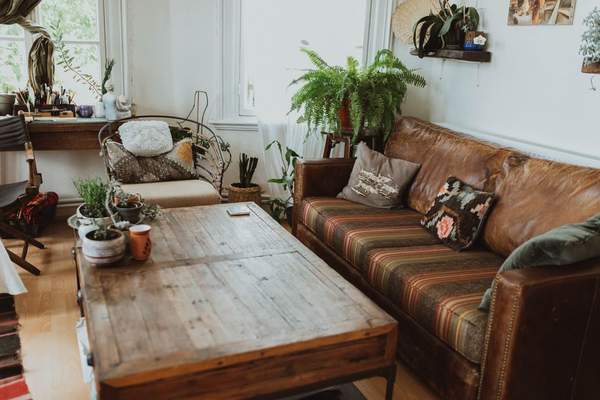
The best boho living room ideas have a little unpredictability: a woven chair beside a tailored sofa, a vintage textile, perhaps a lamp found on a weekend trip. Yet the room still feels peaceful. That balance doesn’t come from matching everything. It comes from repeating a few colors, varying texture, and giving memorable pieces space to stand out.
Think of a bohemian living room as a collection with an editor. You can embrace pattern, handmade details, and personal finds without filling every surface.
Choose a Calm Foundation Before Adding Character
A grounded background makes eclectic pieces easier to live with. Warm white, oatmeal, sand, muted clay, and soft greige all let wood grain and textiles become the story. This doesn’t mean your walls must be beige. A dusty sage or subdued terracotta can be just as calming when larger furniture stays relatively quiet.
Choose one dominant neutral, one supporting color, and one more expressive accent. For example, an ivory sofa and natural oak table might sit with olive cushions and small touches of rust. Repeat the olive in a print or planter so it feels intentional. Treat this as a guide rather than a rigid color formula.
Layer Patterns by Scale, Not by Matching Prints
Pattern is central to many boho living room ideas, but piling equally busy designs together can make a room feel restless. Instead, combine one large-scale pattern, one medium motif, and one small print. A generous striped rug might pair with a floral cushion and a finely patterned throw.
Keep at least one color shared across the patterns. The shapes can differ: stripes, block prints, and geometric motifs often work beautifully together when their palettes connect. Give the eye a resting place, too. A plain sofa, undecorated wall, or solid cushion helps patterned pieces feel more special.
Make Texture Do Some of the Decorating
Layered living room decor works best when surfaces offer contrast. Pair smooth ceramics with rough linen, plush upholstery with cane, and matte painted walls with softly polished wood. Even a restrained palette feels rich when materials react differently to light.
Try varying texture at three heights: a wool or jute rug underfoot, tactile cushions at seating level, and a woven shade or framed textile above. Avoid choosing everything in the same chunky weave. Too much rattan, fringe, and macramé can flatten the very contrast you’re seeking.
Display Finds Like a Collection, Not a Storeroom
The collected feeling comes from objects with different histories: pottery from a local maker, a family photograph, an old wooden stool, a favorite travel print. Give each piece a reason to be visible. Rather than placing small accessories everywhere, arrange a few related items together and leave some shelving open.
A useful styling trick is to group objects at different heights. Place a low bowl beside a taller vase and a small framed image, then stop. The gap around the arrangement is part of the design. Eclectic living room ideas feel more personal when you can actually notice the individual pieces.
Use Plants and Lighting to Soften the Edges
Plants bring organic shapes that balance angular tables and rectangular sofas. One substantial floor plant often makes more impact than six tiny pots scattered around the room. Choose plants for the actual light available, and check care requirements before positioning them far from a window.
Lighting deserves the same layered approach as textiles. Combine general light with a reading lamp and a softer table lamp. Warm-toned bulbs can make earthy fabrics feel inviting in the evening, while a woven or fabric shade adds another tactile detail. Keep task lighting bright enough to be useful; cozy shouldn’t mean difficult to read.
Plan the Furniture Around Conversation and Movement
Boho decor can look casual without sacrificing comfort. Position seats so people can talk without leaning across the room. Leave a clear walking route between doorways and around the coffee table. A low table looks relaxed, but it still needs to be practical for setting down a drink.
A Practical Example for a 12-by-15-Foot Living Room
Imagine a room with an ivory sofa against the longer wall and a window opposite. Start with a patterned rug large enough for at least the sofa’s front legs to rest on it. Add a slim wooden coffee table, a rust-colored armchair angled toward the sofa, and one leafy plant near the window.
Now bring in two cushions that echo colors from the rug and a striped throw with a smaller pattern. Hang one substantial artwork above the sofa instead of filling the wall with a dozen unrelated pieces. A floor lamp beside the armchair finishes the reading corner. The arrangement feels richly layered, yet the path across the room remains clear.
Adapt the Look for Smaller Spaces
In a compact room, choose pieces that provide character without taking up too much floor area. A patterned cushion, vintage wall art, and one sculptural lamp can communicate the mood without an extra chair or bulky basket. Furniture with visible legs can also help the floor feel more open.
Consider the room from the doorway. If the first thing you see is a dense cluster of plants, pillows, and furniture, move one element elsewhere. For other space-saving arrangements, explore small living room layout ideas, especially before committing to an oversized sectional.
Know When to Stop Adding Accessories
Don’t buy decor simply to fill an empty corner. Live with the space for a few days, and notice whether it needs lighting, storage, or nothing at all. A living room rug size guide can help if an undersized rug is making separate furniture pieces feel disconnected. For palette inspiration, living room paint color ideas can help refine the background before you add more accessories.
Frequently Asked Questions
How do I make a boho living room look less cluttered?
Limit the number of competing patterns, group small accessories, and leave open space on shelves and walls. Keep practical storage close to seating so everyday items don’t blend into the decorative displays.
Can a boho living room look modern?
Absolutely. Pair clean-lined furniture with textured textiles, handmade ceramics, and one or two vintage finds. A simpler color palette keeps the result contemporary while preserving warmth and personality.
What colors work best for boho living room decor?
Earthy neutrals, olive, rust, ochre, muted blue, and warm pink all work well, but there is no required palette. Choose colors you enjoy and repeat a few throughout the room for cohesion.
How can I decorate a bohemian living room on a budget?
Rearrange existing furniture first, then shop secondhand for distinctive art, lamps, or small tables. Changing cushion covers or adding a well-chosen throw is often more effective than buying several new ornaments.
Let the Room Grow with You
The most inviting boho spaces rarely look finished overnight. Build around comfortable furniture, introduce pattern with restraint, and keep objects that mean something to you. When color repeats, textures vary, and every corner has room to breathe, a collected living room feels relaxed rather than chaotic.
