
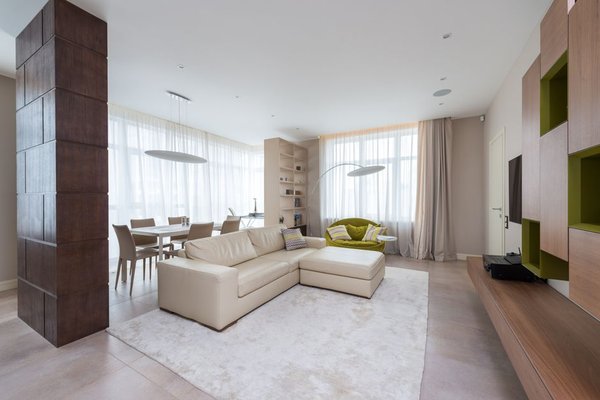
The best living rooms in 2026 are not designed to look perfect in a photograph. They are designed to feel good in everyday life: comfortable for quiet evenings, flexible enough for guests and expressive enough to reveal something about the people who live there. That shift is shaping the most useful 2026 living room design trends. Rather than following one rigid aesthetic, homeowners are combining warmth, character and practical choices to create rooms that feel collected over time.
Warm, Grounded Colour Palettes
Cool grey is no longer the automatic backdrop for a modern home. Living room trends 2026 are moving towards warmer, earthier shades such as khaki, clay, caramel, cocoa, muted terracotta and creamy off-white. These colours create a softer atmosphere and work especially well with timber, woven fibres and aged metals.
A warm neutral does not have to make the room beige from floor to ceiling. Use it as a foundation, then introduce deeper accents through an armchair, curtains, artwork or a painted alcove. Olive green, burgundy, indigo and rich brown can add depth without overwhelming the space. Always test paint at different times of day, as changing light can alter its undertone.
Layered Rooms With a Personal Story
One of the clearest 2026 living room design trends is the move away from matching furniture sets and showroom-style coordination. A more current room might pair a contemporary sofa with a vintage side table, a handmade lamp, family photographs and artwork gathered over several years. The goal is not clutter, but personality.
Start with pieces that genuinely matter to you, then build around them. Repeating one colour, material or shape will help unrelated objects feel connected. This approach also makes living room decor ideas more sustainable, because you can reuse, repair or reupholster existing furniture instead of replacing everything.
Curves and Softer Silhouettes
Rounded forms continue to influence modern living room design in 2026. Curved sofas, barrel chairs, oval coffee tables and arched mirrors soften rooms dominated by straight walls and rectangular windows. Even a small circular side table or a lamp with a rounded base can make the layout feel more relaxed.
The key is balance. Too many sculptural pieces can reduce usable space, particularly in a compact room. Choose one or two curved focal points and leave enough room for comfortable movement. A rounded coffee table is especially practical in a family space because it improves circulation and removes sharp corners.
Texture, Patina and Natural Materials
Flat, flawless finishes are giving way to more tactile surfaces. Limewash-style walls, textured plaster effects, visible wood grain, linen, wool, leather and woven details create depth even when the palette is restrained. Patinated metal and slightly aged furniture can also bring character to a newer property.
You do not need a major renovation to use this trend. Layer a wool rug over plain flooring, add linen curtains and combine cushions with different weaves. Placing a rough ceramic object beside smooth glass or metal creates the small contrasts that make a room feel richer.
Comfort-Led Furniture Choices
In 2026, comfort is part of the design rather than an afterthought. Deep seating, supportive armchairs, generous ottomans and softer upholstery are replacing furniture selected mainly for its sleek appearance. Successful layouts also support conversation instead of directing every seat towards the television.
Before buying anything large, map its dimensions on the floor with tape. Check walking routes, door openings and the distance between seating and tables. An oversized sofa can quickly become frustrating if it blocks the natural flow of the room. Good modern living room design should look inviting while remaining easy to use.
Flexible Zones for Real Life
Many living rooms now serve several purposes, and the 2026 response is thoughtful zoning. A reading chair beside a floor lamp can create a quiet corner. A slim desk can sit within fitted storage, while a console behind the sofa may work as both a display surface and an occasional workstation.
Rugs, lighting and furniture placement can define zones without adding walls. In an open-plan room, turn the sofa so its back creates a subtle boundary between seating and dining areas. Repeat colours or materials to keep the zones visually connected.
Lighting That Creates Atmosphere
A single central ceiling light rarely provides the flexibility a living room needs. Layered lighting is becoming essential to living room decor ideas, combining ambient, task and accent sources. That might mean a ceiling fitting for general light, a floor lamp for reading and smaller lamps for a softer evening mood.
Decorative lighting is also becoming more expressive. Sculptural bases, pleated shades, coloured glass and vintage-inspired fittings can act as design features even when switched off. Where possible, use dimmers and warm-toned bulbs in relaxation areas, with brighter task lighting near desks or reading chairs.
Statement Details Above Eye Level
Design attention is moving upwards. Painted ceilings, detailed cornices, ceiling wallpaper and carefully chosen pendant lights can make the room feel more considered. In a small space, carrying the wall colour onto the ceiling may create a cocooning effect, while a lighter ceiling can preserve an airy feeling.
Let one upper-level feature lead rather than making every surface compete. A bold ceiling can be echoed subtly through cushions, artwork or accessories.
How to Use the Trends Without Redecorating Everything
The smartest way to approach 2026 living room design trends is selectively. Identify what already works, then choose one or two updates that improve both appearance and comfort. A warmer wall colour, a better furniture layout, layered lamps or a vintage table may have more impact than a complete makeover.
Prioritise choices that suit the room’s size, light and daily use. Trends should provide inspiration, not rules. A living room will feel current for longer when its design reflects your routines and possessions rather than copying a finished image exactly.
Frequently Asked Questions
What is the biggest living room trend for 2026?
The strongest direction is towards warm, layered and personal interiors. Rooms are becoming less coordinated and more characterful, with natural materials, tactile finishes and a mix of old and new pieces.
Are neutral living rooms still popular in 2026?
Yes, but warmer neutrals are replacing colder grey schemes. Khaki, sand, cream, taupe and soft brown provide a calm base that can be lifted with richer accent colours.
How can I update my living room on a small budget?
Rearrange the furniture, improve the lighting and add texture through cushions, curtains or a rug. Painting one wall, an alcove or the ceiling can also make a noticeable difference without replacing the main furniture.
Do all living room furniture pieces need to match?
No. A mix of complementary pieces usually feels more relaxed and individual. Repeat colours, shapes or materials to create cohesion instead of buying a complete matching set.
Conclusion
The most appealing living room trends 2026 share a common purpose: making the room warmer, more comfortable and more personal. Curved furniture, tactile materials, layered lighting and grounded colour palettes can all help, but the best result comes from choosing ideas that support how you actually live. Treat the trends as a toolkit and create a living room that feels current without losing its own story.
