
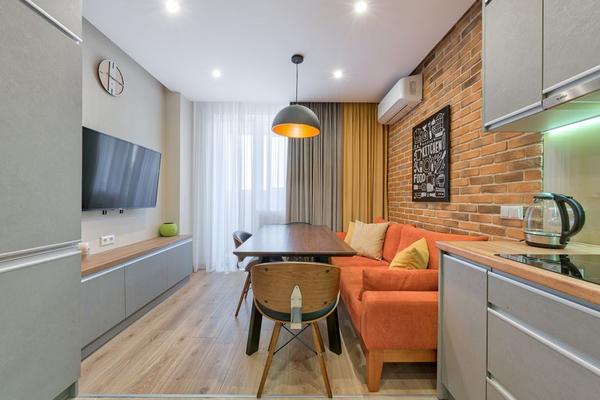
Small homes often feel crowded not because they lack square footage, but because too many objects do only one job. A coffee table that only holds mugs, a bed that consumes an entire wall all day, or a desk that sits unused every evening can overwhelm a compact room. Multi-functional furniture for small spaces solves that problem by giving each piece a clearer role. The aim is to choose a few hardworking pieces that reduce clutter, improve movement, and adapt as daily routines change.
Start With the Jobs Your Room Needs to Do
Before buying space-saving furniture, list the activities that regularly happen in the room. A studio may need to support sleeping, dining, working, relaxing, and storage within one open area. A small spare room might switch between home office, guest room, and hobby space. Once those functions are clear, it becomes easier to see where one piece can replace two separate items.
For example, a couple in a one-bedroom flat may use the living room for remote work during the day and entertaining at night. Instead of squeezing in a permanent desk and a separate console, a slim drop-leaf table can act as a laptop station, dining surface, and occasional serving area. That single choice can free more floor space than buying smaller versions of both pieces.
Choose Furniture That Changes With the Day
Sofa Beds That Work as Everyday Seating
A sofa bed is a classic form of dual-purpose furniture, but the best choice is not automatically the smallest model. It should feel comfortable in its everyday role and convert easily when needed. If opening it requires moving half the room, the second function will rarely be useful.
Measure the full opened depth as well as the normal sofa footprint. In a tight living room, a compact pull-out or click-clack design may be more practical than a deep sleeper. Leave enough clearance so it can open without blocking the main route through the room.
Extendable and Drop-Leaf Tables
A full-size dining table can dominate a small room even when only one or two people use it most days. Extendable tables keep the everyday footprint modest while still providing extra surface area for guests. Drop-leaf versions are especially practical against a wall because one side can remain folded until needed.
Small living room layout ideas is a natural internal topic to connect with here because furniture scale and circulation matter just as much as table size.
Ottomans and Benches With Hidden Storage
Hidden storage is most useful when it is built into furniture you would own anyway. A storage ottoman can serve as a footrest, extra seat, coffee table, and place for blankets. A bench by the entrance can hold shoes while providing a place to sit.
Accessibility matters. Storage that requires lifting heavy furniture or moving several objects soon becomes inconvenient. Choose drawers, hinged lids, or lift-up sections that can be opened easily.
Use Vertical Space More Effectively
Small space solutions are not limited to folding furniture. Tall pieces can increase storage without consuming extra floor area. A narrow bookcase with closed cupboards at the bottom can hold display pieces, paperwork, electronics, and everyday clutter in one footprint. A tall wardrobe with shelving above the hanging rail can often reduce the need for another chest of drawers.
Wall-mounted desks are another strong option where floor area is limited. Some fold closed when not in use, while others combine a shallow work surface with shelving above. Renters should check fixing restrictions before installation and may prefer freestanding ladder desks where permanent mounting is not allowed.
Renter-friendly storage ideas is another useful internal topic here, especially for people who want extra function without permanent alterations.
Use Furniture to Create Zones
In an open-plan studio, multi-functional furniture can define areas as well as serve practical needs. An open shelving unit placed perpendicular to a wall can separate a sleeping area from a living zone while still allowing light through. A narrow console behind a sofa can mark the edge of a seating area while providing a work surface or extra storage.
A low storage unit at the foot of a bed can create a visual boundary and hold clothing, books, or media equipment. Slim pieces usually work better than bulky dividers because they create structure without making the room feel boxed in. Studio apartment zoning ideas is a natural internal topic to explore alongside this approach.
Look for Simple Mechanisms
Multi-functional furniture should make daily life easier. When comparing pieces, test how the secondary function works. Can a table extend without removing everything from the top? Can storage drawers open when nearby furniture is in place? Can a folding desk close with cables connected? Can a sofa bed be converted by one person?
Durability matters too. Hinges, runners, folding legs, and lifting mechanisms receive the most stress. A simpler design with sturdy hardware often gives better long-term value than a complicated piece with configurations you may never use.
Measure for Movement, Not Just Fit
A piece can technically fit in a room and still make the room harder to use. Before ordering, mark its footprint on the floor with painter’s tape. Walk around it, open nearby doors, pull out chairs, and imagine the furniture in its fully extended position. This quick test can reveal problems that product dimensions alone miss.
Protect the main walking route first. A smaller sofa with storage may be more useful than a larger sectional, while nesting tables can provide temporary surface space without permanently narrowing a passage.
FAQ
What is the best multi-functional furniture for a studio apartment?
The best pieces are usually those that support the studio’s most repeated activities, such as a sofa bed, storage ottoman, extendable table, wall-mounted desk, or shelving unit that also acts as a divider. Prioritise items that are easy to convert and do not block circulation.
Is multi-functional furniture always more expensive?
No. Some specialist pieces cost more because of their mechanisms, but storage benches, nesting tables, drop-leaf tables, and ottomans are available across many price ranges. Value depends on whether one item genuinely replaces additional furniture.
How do I know if a convertible piece will fit?
Check both its closed and fully extended dimensions. Mark those measurements on the floor, then test nearby doors, drawers, chairs, and walking routes. This is especially important for sofa beds, extendable tables, and pull-out storage.
Can multi-functional furniture make a small room look less cluttered?
Yes, when it reduces the number of separate pieces and gives everyday items a clear home. The effect is strongest when furniture is properly scaled and storage is easy to access rather than hidden in awkward compartments.
Make Every Piece Earn Its Place
A compact home needs furniture that responds to real routines. Start with the jobs each room must handle, then choose pieces that combine those functions without sacrificing comfort or movement. A table that expands only when needed, a bench that hides daily clutter, or a shelving unit that also creates a zone can make a small room feel calmer and more capable. When every piece earns its footprint, limited space becomes much easier to live with.
