
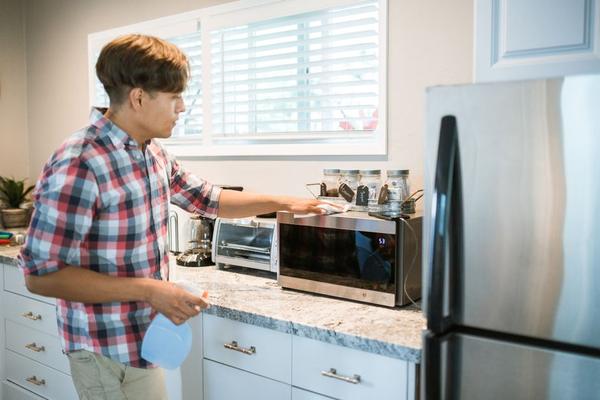
A splatter of roasting juices seems harmless until it hardens into a black patch that smokes every time you preheat the oven. Learning how to clean an oven does not require endless scrubbing or the strongest product on the shelf. The trick is to separate loose crumbs, greasy film and genuinely baked-on residue, then deal with each using the gentlest suitable method.
Start with a cool oven, check its care manual and allow time for the cleaner to loosen the mess. Patience usually works better than an abrasive pad.
Before You Start: Check Your Oven and Gather Supplies
Not every oven interior can be treated the same way. Standard enamel, self-cleaning liners and catalytic or other specialty coatings may have different restrictions. Read the manufacturer’s instructions before applying a paste, spray or scraper, particularly to textured panels.
For a typical manually cleaned enamel oven, gather warm water, mild dish soap, soft cloths, a non-scratch sponge, a plastic scraper and baking soda if permitted. Place an old towel beneath the open door.
Switch the oven off and let it cool completely. Remove trays and cookware. Avoid wetting heating elements, fans, vents, controls and electrical openings. Never mix cleaning chemicals; follow product labels and ventilate the kitchen as instructed.
Choose the Right Method for the Mess
Light splatters and fresh grease
Warm, soapy water is often enough for a recent spill. Wipe the cooled surface with a damp cloth, loosen residue gently and finish with a cloth rinsed in clean water. This is among the best oven cleaning tips: remove spills before repeated cooking hardens them.
Sticky or baked-on grease
For compatible smooth enamel, a baking-soda-and-water paste can help soften stubborn patches. It needs contact time, not vigorous scraping. If the manual recommends a particular product instead, follow that guidance. Baking soda is not automatically safe for every specialty liner.
Heavy buildup across the oven
Some ovens have a steam-clean setting for lighter soil or a high-temperature self-clean cycle for substantial residue. These functions work differently. Use only your appliance’s designated cycle, following its preparation and ventilation instructions.
How to Clean an Oven by Hand, Step by Step
1. Remove crumbs and loose debris
Take out the racks and lift loose crumbs from the cool oven floor. A handheld vacuum may help with dry debris if the appliance is completely cool. Removing grit first prevents scratching while you wipe.
2. Soften the greasy areas
Wipe accessible smooth surfaces with warm, soapy water. Where the manual allows baking soda, combine it with water to make a spreadable paste and dab it onto baked-on spots. Keep it away from gaskets, vents, fan openings, exposed elements and specialty liners. Let it sit for several hours, or overnight for stubborn residue.
After roasting a chicken, for example, the worst buildup often sits directly beneath the tray rather than across every wall. Concentrating the paste on that cooled, compatible patch saves time.
3. Lift the softened residue gently
Use a damp, non-scratch sponge to wipe away paste and grease. A plastic scraper held nearly flat can loosen a ridge on a surface approved for scraping. If a mark resists, repeat the softening step instead of reaching for a metal blade or steel wool.
4. Rinse until no cleaning residue remains
Wipe repeatedly with a clean, lightly damp cloth, rinsing between passes. Check corners and the oven floor for chalky traces. Leftover product can cause odors when the oven heats. Dry accessible surfaces before replacing racks.
How to Clean Oven Racks Without Damaging Them
To clean oven racks, first check whether yours are plain metal, coated or telescopic. Standard removable racks can often soak in a sink or tub of warm, soapy water. Protect the sink, scrub with a non-scratch brush, rinse and dry before reinstalling.
Telescopic runners and specially coated racks may need different treatment; soaking can damage their mechanisms or finish. Follow the manual rather than assuming every rack is dishwasher-safe. A kitchen deep-cleaning checklist can help plan related jobs.
Oven Glass Cleaning: Clear the Window Safely
The door attracts greasy spatters, but oven glass cleaning needs a lighter touch than scrubbing a baking tray. When cool, try mild soapy water and a soft cloth. On glass approved for the method, a little baking-soda paste may loosen cloudy patches; wipe and rinse carefully.
Do not use sharp blades, abrasive powders or excess water near door edges. Never soak or scrub the flexible door gasket, which helps retain heat. For grime trapped between glass panes, consult the manual or a qualified technician instead of dismantling the door without instructions.
Should You Use the Self-Cleaning Cycle?
A high-temperature self-clean cycle heats residue until it becomes ash, but preparation matters. Remove cookware, foil, liners and racks unless the manual explicitly says otherwise. Wipe out large spills, ventilate the kitchen and keep children and pets away from the hot appliance. Birds are particularly sensitive to fumes and should be kept safely away from the affected air.
Never apply chemical oven cleaner before a self-clean cycle unless the manufacturer allows it. Do not force open a locked door; wait until the cycle and cooling period finish. Address damage, unusual smoke or heavy pooled grease before running a cycle.
Keep the Oven Cleaner Between Deep Cleans
Place a baking tray beneath food likely to drip without covering vents or lining the oven floor with foil. Once everything cools, wipe fresh splashes before they harden. Checking after messy roasting sessions is more useful than following a rigid monthly schedule.
Cleaning a range hood filter and cleaning a glass stovetop are sensible companion tasks, since airborne grease and cooking spills rarely stay in one place.
Frequently Asked Questions
How long should baking soda sit in an oven?
On a compatible surface, allow several hours for paste to soften baked-on marks; overnight may help stubborn patches. Follow the manual and remove all traces afterward.
Can I use vinegar and baking soda together?
They fizz when mixed, but that reaction does not necessarily improve baked on grease removal. Let an approved cleaning method work, then rinse thoroughly. Never mix commercial cleaning products.
Can I use oven cleaner on a self-cleaning oven?
Many manufacturers prohibit commercial oven cleaner on self-cleaning liners because it can damage the finish. Check the instructions for your exact model before using chemicals.
How often should I deep-clean my oven?
It depends on how often you cook and how much spills. Wipe fresh splatters after cooling, and deep-clean when buildup or persistent odors suggest it is needed.
A Cleaner Oven With Less Scrubbing
Work in stages: remove loose debris, soften grease, clean the racks and glass separately, then rinse and dry. Match the method to your oven’s finish and the severity of the mess. Small cleanups after spill-heavy meals make the next deep clean far less demanding.
