
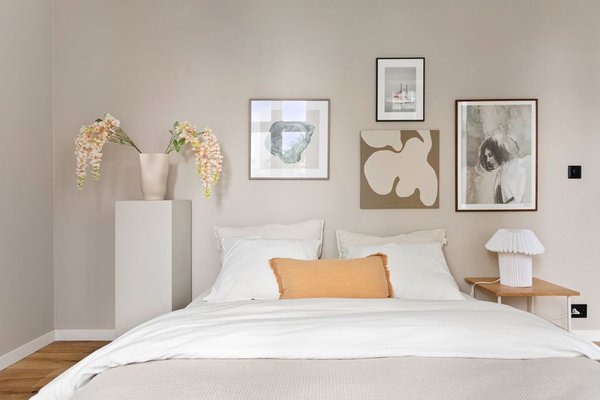
Wall art above a bed can turn a plain sleeping space into a finished focal point, but this is one place where appearance should not be the only consideration. Anything mounted over pillows sits directly above you for hours, so scale, weight, frame material, wall construction, and fixing method all matter. The aim is to create bedroom wall decor that feels balanced while keeping the overhead area as light and securely installed as practical.
Size the Art to the Bed, Not Just the Wall
The bed is the visual anchor of the room, making it a better reference point than the width of the wall. As a flexible starting point, choose a single artwork or grouped arrangement that spans roughly half to three-quarters of the headboard width. This usually creates enough presence without making the art feel wider or heavier than the furniture beneath it.
For example, with a 150-centimetre-wide headboard, try marking an artwork area about 75 to 110 centimetres wide with painter’s tape. View the outline from the doorway and the foot of the bed before buying or drilling. This simple test shows whether the proportions feel right in the actual room.
Find the Right Height Above the Headboard
Art above headboard furniture should look connected to the bed rather than floating near the ceiling. A gap of roughly 15 to 25 centimetres above the headboard is a useful starting range for many rooms, though headboard height, frame depth, ceiling height, and artwork size can change the ideal position.
If there is no headboard, leave enough clearance that sitting up, changing bedding, or arranging pillows will not bring you into contact with the artwork. In that situation, lightweight above bed decor ideas are especially useful because the wall area is more exposed.
Choose Hardware for the Wall and the Weight
Safe installation starts with knowing what the wall is made from. Plasterboard or drywall, timber studs, brick, concrete, and older plaster walls require different fixings. Check the manufacturer’s instructions for both the fixing and hanging system, and make sure the stated capacity covers the total weight of the frame, glazing, backing, and artwork.
Where the layout allows, fixing into a solid stud or suitable masonry can provide a more dependable attachment for heavier pieces. Wall anchors should be selected for the specific wall material rather than treated as interchangeable. Two secure attachment points can also reduce rotation and help the frame stay level. For a large or unusually heavy piece, professional installation is sensible.
Be Careful With Adhesive Hanging Products
Adhesive strips and hooks can work for products specifically designed for them, but only when the surface, preparation, object weight, and placement match the manufacturer’s directions. Textured paint, dusty plaster, wallpaper, humidity, and unsuitable surfaces can affect adhesion. If you are uncertain, use an appropriate mechanical fixing or choose another location.
Use Lighter Materials Over the Pillow Area
If safety is the priority, reduce overhead mass before worrying about style. Canvas, textile hangings, unglazed prints, fabric panels, lightweight decorative pieces, and frames with acrylic glazing can create impact without the weight or breakage risk of a large glass-fronted frame.
No hanging method can guarantee that an object will never fall. The more cautious approach is to keep heavy or fragile objects away from the area directly above the pillows. Heavy mirrors, loaded shelves, ceramics, and deep solid-wood pieces can often move to an adjacent wall while lighter wall art provides the focal point over the bed.
Choose a Layout That Fits the Room
One Large Piece
A single statement artwork creates a calm, uncluttered focal point and is easy to centre. It works especially well with patterned bedding or a detailed upholstered headboard because there are fewer competing shapes.
A Pair or Triptych
Two or three coordinated pieces can suit a wide headboard. Measure the complete arrangement, including the gaps, as though it were one piece. Consistent spacing and a repeated colour or frame finish help the group read as one feature.
A Small Gallery Arrangement
A gallery arrangement can work above a bed, but keep its outer edges visually within the headboard width and avoid mixing one very heavy frame with several lightweight ones. Useful related topics for planning the wider space include bedroom gallery wall ideas, choosing art for small bedrooms, and bedroom colour schemes.
Match the Artwork to the Bedroom Mood
Because the bed is usually the room’s main focal point, artwork should support the atmosphere rather than compete with it. Landscapes, botanical prints, abstract forms, monochrome photography, and restrained graphic art can all work well when their colours connect with the bedding, curtains, rug, or headboard.
In a small bedroom, one substantial piece can look cleaner than many tiny frames. In a wide room, a horizontal artwork or triptych can echo the shape of the headboard. If the ceiling is low, avoid stacking too many rows, which can make the wall feel crowded.
Frequently Asked Questions
What size wall art should go above a queen bed?
There is no universal size because queen beds can have very different headboards. As a starting point, aim for artwork or a grouped arrangement around half to three-quarters of the headboard width, then test the outline with painter’s tape.
How far above the headboard should art hang?
Roughly 15 to 25 centimetres is a practical visual starting point for many rooms. Adjust the gap according to the headboard, artwork size, and ceiling height so the piece feels connected without looking cramped.
Is it safe to hang framed art above a bed?
It can be when the frame is securely mounted with fixings suitable for the wall material and total weight. Lighter frames and non-glass options reduce overhead weight. If the piece is heavy or the wall construction is uncertain, consider professional installation or another location.
What can I put above a bed instead of a heavy picture?
Consider canvas, textile art, fabric panels, unglazed prints, lightweight decorative panels, or leaving the area open and styling the wall beside the bed instead. The best choice complements the room without creating unnecessary weight over the sleeping area.
Create a Focal Point That Looks Good and Feels Secure
The best wall art above bed arrangements start with proportion and safety, then move into colour and style. Let the headboard guide the width, keep the artwork visually connected to the furniture, choose lighter materials where practical, and match every fixing to the wall and actual object weight. With those decisions handled first, the finished bedroom can feel polished, calm, and comfortable.
