
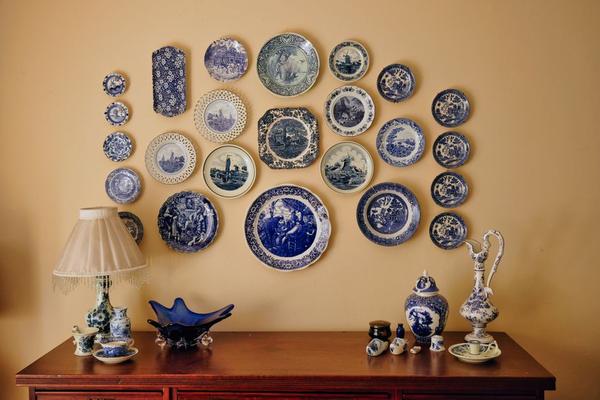
A home becomes memorable when it shows evidence of the people who live there: ceramics from different trips, framed concert tickets, inherited glassware, old cameras, shells from family holidays, or well-read books. In 2026, interiors are moving further away from perfectly staged rooms and toward spaces that feel layered, lived in, and personal. Curating personal collections as home decor fits naturally into that shift because the objects already carry a story.
The challenge is making a collection feel intentional rather than crowded. You do not need matching objects or an expensive display cabinet. What matters is deciding what deserves attention, creating a visual relationship between pieces, and leaving enough breathing room for each group to register.
Start With Meaning Before Style
Before arranging anything, look at what you have and ask why you keep it. Some objects matter because of where they came from; others because of who gave them to you. A collection can also reflect a long-standing interest, such as vintage pottery, vinyl records, botanical prints, miniature cars, or handmade baskets.
Meaningful home decor works best when the connection is genuine. You do not have to display everything. Choose pieces that tell the clearest story, have strong shapes or colours, or simply make you happiest.
Give the Collection a Clear Home
A collection usually looks more deliberate when it has a defined zone. Instead of scattering similar objects around an entire room, group them on one bookshelf, console, mantel, wall, or cabinet. The eye then reads them as a collection rather than unrelated clutter.
Imagine you have eight small ceramic pieces collected from different cities. Placing them throughout three rooms may dilute their impact. Arranging most of them together on one living-room shelf creates a stronger story while still allowing one special piece to live elsewhere if it suits that space.
Create Rhythm With Height, Shape, and Space
Good personal decor styling is less about symmetry and more about rhythm. Mix tall and short pieces, solid and delicate forms, and objects with different silhouettes. If everything is the same height, the display can feel flat. If every inch is filled, it can feel visually noisy.
Begin with the largest or most visually important object, then build smaller pieces around it. Leave small gaps so individual shapes remain visible. Books can act as risers for smaller objects, while a tray can visually gather several tiny pieces into one unit.
Do Not Force a Formula
Groups of three or five often feel relaxed, but collections do not have to follow an odd-number rule. A pair of inherited candlesticks should stay a pair if that is how they make sense. Let the story guide the arrangement rather than forcing every display into the same styling formula.
Use Repetition to Connect Mixed Objects
Collected interiors often include pieces from different periods, places, and styles. Repetition helps them coexist. You might repeat a colour, material, frame finish, or shape across a display. Unrelated travel finds can feel cohesive when several contain warm brass, blue glaze, dark wood, or similar natural textures.
The same idea works on walls. Photographs, postcards, sketches, and textiles can feel unified when spacing is consistent or frames share a limited palette. Cohesion does not require everything to match; it gives the eye a pattern to follow.
Mix Collections With Everyday Objects
A room should not feel like a museum unless that is genuinely your goal. Collections often look warmer when mixed with functional pieces. Place a vintage bowl beside current books, use an inherited jug to hold flowers, or display a travel object near a lamp you use every evening.
This is one reason collected interiors feel comfortable. The room is not frozen around precious possessions. It shows how memory, daily life, and design can exist together.
Rotate Instead of Displaying Everything
If you have a large collection, rotation can work better than permanent display. Keep part of it stored safely and change the arrangement every few months. This reduces visual overload and can also help protect fragile items from constant light and dust.
Rotation works especially well with artwork, books, ceramics, and textiles, and it lets you rediscover pieces instead of letting them fade into the background.
Let the Room Influence the Edit
Not every collection belongs in every space. Consider scale, moisture, sunlight, traffic, and how the room is used. Delicate paper items may not suit a steamy bathroom. Fragile glass may be risky on a low table in a busy family room. A dense collection can overwhelm a narrow hallway but look balanced across a long shelving wall.
Wall colour, lighting, furniture, and empty space all affect how a collection reads. Sometimes removing one object makes the rest clearer.
A Practical Way to Edit a Shelf
If a shelf feels cluttered, take everything off and rebuild it. Put back the objects you care about most first. Add books or larger items to establish height, then introduce smaller pieces. Step back after each group and check whether your eye has somewhere to rest.
Take a quick phone photo when you think you are finished. It often reveals crowding, awkward gaps, or one object that dominates more than expected, making the overall composition easier to judge.
Build the Rest of the Room Around the Same Idea
Related design topics worth exploring include styling bookshelves without clutter, creating a gallery wall with mixed artwork, and decorating with vintage and inherited pieces. Each follows the same principle: choose objects for meaning first, then arrange them with enough structure to feel intentional.
Frequently Asked Questions
How many items should I display in a collection?
There is no ideal number. Display enough pieces to establish a visual theme while leaving some open space. A small shelf may need only a few objects, while a large cabinet can hold many more if they are broken into clear groups.
How do I stop a collection from looking cluttered?
Group related pieces together, vary their height, repeat a few colours or materials, and leave visible gaps. Removing weaker items is often more effective than adding extra accessories.
Can different collections be shown in the same room?
Yes. Give each collection a defined area and create a link between them through colour, material, framing, or scale. This keeps the room layered without making every surface compete for attention.
Should valuable collections be displayed openly?
It depends on the material and the room. Fragile, light-sensitive, or irreplaceable pieces may be better in a closed cabinet or away from direct sunlight, moisture, pets, and busy walkways.
Make the Display Personal, Not Perfect
The most successful collections do not look as though they were bought in one afternoon. They reveal interests, places, relationships, and time. Curating personal collections as home decor is ultimately an editing exercise: keep what matters, group it with purpose, and give every display enough space to be appreciated.
A meaningful room can still be polished, but perfection is not the goal. When shelves, walls, and surfaces hold objects that genuinely belong to your life, the result has something trend-led rooms often struggle to achieve: a sense of identity that cannot be copied exactly.
